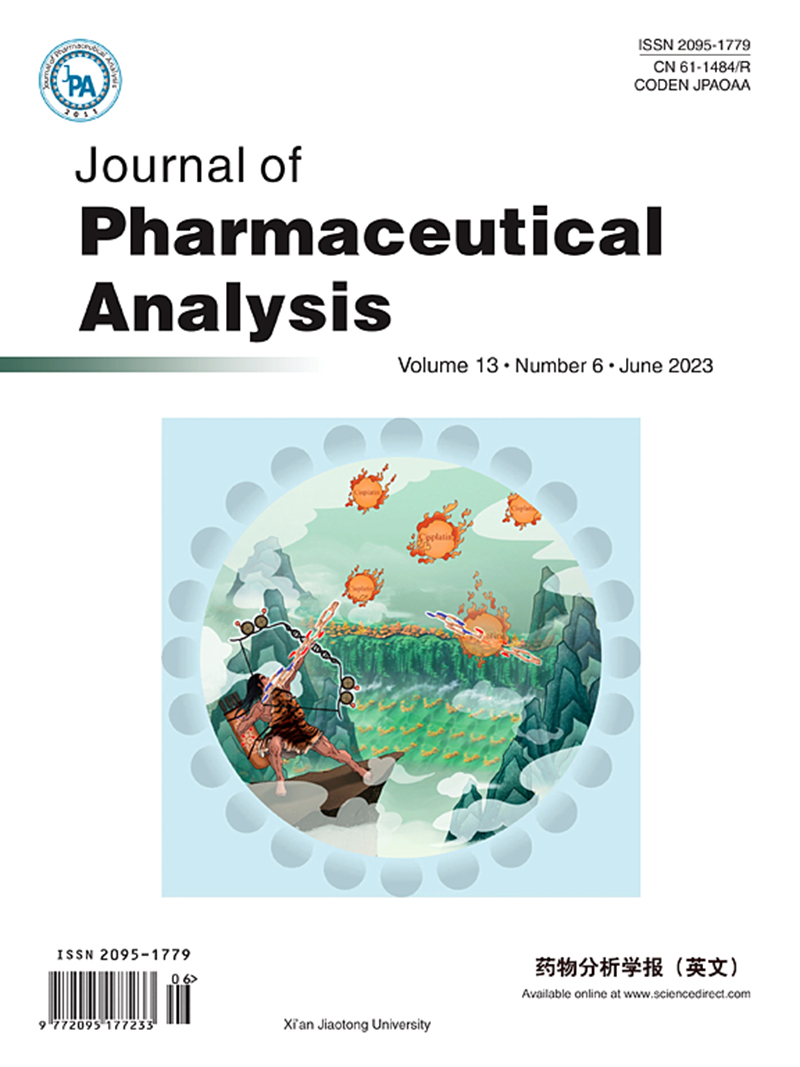
| Citation: | Liuyun Gong, Yinliang Lu, Jing Wang, Xinyue Li, Jing Zhao, Yuetong Chen, Rongze Ma, Jinlu Ma, Tianya Liu, Suxia Han. Cocktail hepatocarcinoma therapy by a super-assembled nano-pill targeting XPO1 and ATR synergistically[J]. Journal of Pharmaceutical Analysis, 2023, 13(6): 603-615. doi: 10.1016/j.jpha.2023.04.017

|

|
F. Islami, K.D. Miller, R.L. Siegel, et al., Disparities in liver cancer occurrence in the United States by race/ethnicity and state, CA Cancer J. Clin. 67 (2017) 273-289.
|
|
C. Wang, Y. Cao, C. Yang, et al., Exploring liver cancer biology through functional genetic screens, Nat. Rev. Gastroenterol. Hepatol. 18 (2021) 690-704.
|
|
C. Wang, H. Jin, D. Gao, et al., Phospho-ERK is a biomarker of response to a synthetic lethal drug combination of sorafenib and MEK inhibition in liver cancer, J. Hepatol. 69 (2018) 1057-1065.
|
|
C. Xu, Y. Zhang, P.A. Rolfe, et al., Combination therapy with NHS-muIL12 and avelumab (anti-PD-L1) enhances antitumor efficacy in preclinical cancer models, Clin. Cancer Res. 23 (2017) 5869-5880.
|
|
A. Montinaro, I. Areso Zubiaur, J. Saggau, et al., Potent pro-apoptotic combination therapy is highly effective in a broad range of cancers, Cell Death Differ. 29 (2022) 492-503.
|
|
J. She, Y. Li, S. Yan, et al., De novo supraparticle construction by a self-assembled Janus cyclopeptide to tame hydrophilic microRNA and hydrophobic molecule for anti-tumor cocktail therapy and augmented immunity, Chem. Eng. J. 401 (2020), 126080.
|
|
Q. Hu, W. Sun, C. Wang, et al., Recent advances of cocktail chemotherapy by combination drug delivery systems, Adv. Drug Deliv. Rev. 98 (2016) 19-34.
|
|
H.S. Han, B.K. Arun, B. Kaufman, et al., Veliparib monotherapy following carboplatin/paclitaxel plus veliparib combination therapy in patients with germline BRCA-associated advanced breast cancer: Results of exploratory analyses from the phase III BROCADE3 trial, Ann. Oncol. 33 (2022) 299-309.
|
|
J. Guo, L. Huang, Formulation of two lipid-based membrane-core nanoparticles for FOLFOX combination therapy, Nat. Protoc. 17 (2022) 1818-1831.
|
|
J. Niu, C. Maurice-Dror, D.H. Lee, et al., First-in-human phase 1 study of the anti-TIGIT antibody vibostolimab as monotherapy or with pembrolizumab for advanced solid tumors, including non-small-cell lung cancer, Ann. Oncol. 33 (2022) 169-180.
|
|
T. Hank, M. Sandini, C.R. Ferrone, et al., A combination of biochemical and pathological parameters improves prediction of postresection survival after preoperative chemotherapy in pancreatic cancer: The PANAMA-score, Ann. Surg. 275 (2022) 391-397.
|
|
M. Zhang, P. Gong, L. Ge, et al., Nuclear exportin 1 (XPO1) binds to the nuclear localization/export signal of the turnip mosaic virus NIb to promote viral infection, Front. Microbiol. 12 (2022), 780724.
|
|
J. Kim, E. McMillan, H.S. Kim, et al., XPO1-dependent nuclear export is a druggable vulnerability in KRAS-mutant lung cancer, Nature 538 (2016) 114-117.
|
|
O. Podlaha, M. Riester, S. De, et al., Evolution of the cancer genome, Trends Genet. 28 (2012) 155-163.
|
|
P. Lito, N. Rosen, D.B. Solit, Tumor adaptation and resistance to RAF inhibitors, Nat. Med. 19 (2013) 1401-1409.
|
|
A. Inoue, F.S. Robinson, R. Minelli, et al., Sequential administration of XPO1 and ATR inhibitors enhances therapeutic response in TP53-mutated colorectal cancer, Gastroenterology 161 (2021) 196-210.
|
|
B. Haynes, J. Murai, J.M. Lee, Restored replication fork stabilization, a mechanism of PARP inhibitor resistance, can be overcome by cell cycle checkpoint inhibition, Cancer Treat. Rev. 71 (2018) 1-7.
|
|
Q. Shi, L.-Y. Shen, B. Dong, et al., The identification of the ATR inhibitor VE-822 as a therapeutic strategy for enhancing cisplatin chemosensitivity in esophageal squamous cell carcinoma, Cancer Lett. 432 (2018) 56-68.
|
|
W. He, J. Yan, F. Sui, et al., Turning a Luffa protein into a self-assembled biodegradable nanoplatform for multitargeted cancer therapy, ACS Nano 12 (2018) 11664-11677.
|
|
W. He, S. Wang, J. Yan, et al., Self-assembly of therapeutic peptide into stimuli-responsive clustered nanohybrids for cancer-targeted therapy, Adv. Funct. Mater. 29 (2019), 1807736.
|
|
J. Yan, S. Yan, P. Hou, et al., A hierarchical peptide-lanthanide framework to accurately redress intracellular carcinogenic protein-protein interaction, Nano Lett. 19 (2019) 7918-7926.
|
|
W. Yang, W. Liu, X. Li, et al., Turning chiral peptides into a racemic supraparticle to induce the self-degradation of MDM2, J. Adv. Res. 45 (2023) 59-71.
|
|
W. He, J. Yan, Y. Li, et al., Resurrecting a p53 peptide activator - An enabling nanoengineering strategy for peptide therapeutics, J. Control. Release 325 (2020) 293-303.
|
|
J. Yan, F. Ji, S. Yan, et al., A general-purpose nanohybrid fabricated by polymeric Au(I)-peptide precursor to wake the function of peptide therapeutics, Theranostics 10 (2020) 8513-8527.
|
|
Z. Bian, J. Yan, S. Wang, et al., Awakening p53 in vivo by D-peptides-functionalized ultra-small nanoparticles: Overcoming biological barriers to D-peptide drug delivery, Theranostics 8 (2018) 5320-5335.
|
|
W. He, Z. Zhang, W. Yang, et al., Turing milk into pro-apoptotic oral nanotherapeutic: De novo bionic chiral-peptide supramolecule for cancer targeted and immunological therapy, Theranostics 12 (2022) 2322-2334.
|
|
L. Li, W. He, W. You, et al., Turing miRNA into infinite coordination supermolecule: A general and enabling nanoengineering strategy for resurrecting nuclear acid therapeutics, J. Nanobiotechnology 20 (2022), 10.
|
|
S. Yan, J. Yan, D. Liu, et al., A nano-predator of pathological MDMX construct by clearable supramolecular gold(I)-thiol-peptide complexes achieves safe and potent anti-tumor activity, Theranostics 11 (2021) 6833-6846.
|
|
W. He, J. Yan, L. Wang, et al., A lanthanide-peptide-derived bacterium-like nanotheranostic with high tumor-targeting, -imaging and -killing properties, Biomaterials 206 (2019) 13-24.
|
|
J. Yan, Y. Yao, S. Yan, et al., Chiral protein supraparticles for tumor suppression and synergistic immunotherapy: An enabling strategy for bioactive supramolecular chirality construction, Nano Lett. 20 (2020) 5844-5852.
|
|
A. Chen, L. Wu, Y. Luo, et al., Deep tumor penetrating gold nano-adjuvant for NIR-II-triggered in situ tumor vaccination, Small 18 (2022), e2200993.
|
|
L. Gong, Y. Zhang, J. Zhao, et al., All-in-one biomimetic nanoplatform based on hollow polydopamine nanoparticles for synergistically enhanced radiotherapy of colon cancer, Small 18 (2022), e2107656.
|
|
X. Sun, Z. Luo, L. Gong, et al., Identification of significant genes and therapeutic agents for breast cancer by integrated genomics, Bioengineered 12 (2021) 2140-2154.
|
|
G.L. Gravina, W. Senapedis, D. McCauley, et al., Nucleo-cytoplasmic transport as a therapeutic target of cancer, J. Hematol. Oncol. 7 (2014), 85.
|
|
J. Wang, J. Zhao, F. Ma, et al., One stone, two birds: A peptide-Au(I) infinite coordination supermolecule for the confederate physical and biological radiosensitization in cancer radiation therapy, Small 19 (2023), e2204238.
|
|
R. Han, L.W.C. Ho, Q. Bai, et al., Alkyl-terminated gold nanoparticles as a self-therapeutic treatment for psoriasis, Nano Lett. 21 (2021) 8723-8733.
|
|
L. Xu, Y. Liu, Z. Chen, et al., Surface-engineered gold nanorods: Promising DNA vaccine adjuvant for HIV-1 treatment, Nano Lett. 12 (2012) 2003-2012.
|
|
H.S. Han, K.Y. Choi, H. Lee, et al., Gold-nanoclustered hyaluronan nano-assemblies for photothermally maneuvered photodynamic tumor ablation, ACS Nano 10 (2016) 10858-10868.
|
|
S.A.C. Carabineiro, Applications of gold nanoparticles in nanomedicine: Recent advances in vaccines, Molecules 22 (2017), 857.
|
|
L. Kennedy, J.K. Sandhu, M.E. Harper, et al., Role of glutathione in cancer: From mechanisms to therapies, Biomolecules 10 (2020), 1429.
|
|
K. Ock, W.I. Jeon, E.O. Ganbold, et al., Real-time monitoring of glutathione-triggered thiopurine anticancer drug release in live cells investigated by surface-enhanced Raman scattering, Anal. Chem. 84 (2012) 2172-2178.
|
|
Z. Zhang, Q. Deng, C. Xiao, et al., Rational design of nanotherapeutics based on the five features principle for potent elimination of cancer stem cells, Acc. Chem. Res. 55 (2022) 526-536.
|
|
M.I. Setyawati, C.Y. Tay, B.H. Bay, et al., Gold nanoparticles induced endothelial leakiness depends on particle size and endothelial cell origin, ACS Nano 11 (2017) 5020-5030.
|
|
L. Kou, Q. Yao, S. Sivaprakasam, et al., Dual targeting of L-carnitine-conjugated nanoparticles to OCTN2 and ATB0,+ to deliver chemotherapeutic agents for colon cancer therapy, Drug Delivery 24 (2017) 1338-1349.
|
|
L. Liu, X. Xiong, M. Shen, et al., Co-delivery of triptolide and curcumin for ovarian cancer targeting therapy via mPEG-DPPE/CaP nanoparticle, J. Biomed. Nanotechnol. 14 (2018) 1761-1772.
|
|
Y. Dong, D. Zhang, M. Cai, et al., SPOP regulates the DNA damage response and lung adenocarcinoma cell response to radiation, Am. J. Cancer Res. 9 (2019) 1469-1483.
|
|
G. Tchakarska, B. Sola, The double dealing of cyclin D1, Cell Cycle 19 (2020) 163-178.
|
|
F. Zor, F.N. Selek, G. Orlando, et al., Biocompatibility in regenerative nanomedicine, Nanomedicine (Lond) 14 (2019) 2763-2775.
|
|
M.S. Malayappan, G. Natarajan, L. Mockaiyathevar, et al., Acute and subacute toxicity assessment of Madhulai Manappagu (Siddha herbal syrup formulation) in animal model, J. Complement. Integr. Med. 19 (2021) 9-18.
|
|
A. Parker, Y. Kim, The effect of low glycemic index and glycemic load diets on hepatic fat mass, insulin resistance, and blood lipid panels in individuals with nonalcoholic fatty liver disease, Metab. Syndr. Relat. Disord. 17 (2019) 389-396.
|
|
J. Zhou, Z. He, S. Ma, et al., AST/ALT ratio as a significant predictor of the incidence risk of prostate cancer, Cancer Med. 9 (2020) 5672-5677.
|
|
A. Cai, S. Qi, Z. Su, et al., Method comparison and bias estimation of blood urea nitrogen (BUN), creatinine (Cr), and uric acid (UA) measurements between two analytical methods, Clin. Lab. 63 (2017) 73-77.
|
00084-9eae95972-093d-4ae5-a5f7-fa77a8f00d42.jpg)
Figures(1)
Supported by:
Beijing Renhe Information Technology Co. Ltd





 DownLoad: