| Citation: | Weiming You, Zhengjun Zhou, Zhanfeng Li, Jin Yan, Yang Wang. From foe to friend: Rewiring oncogenic pathways through artificial selenoprotein to combat immune-resistant tumor[J]. Journal of Pharmaceutical Analysis, 2025, 15(12): 101322. doi: 10.1016/j.jpha.2025.101322

|
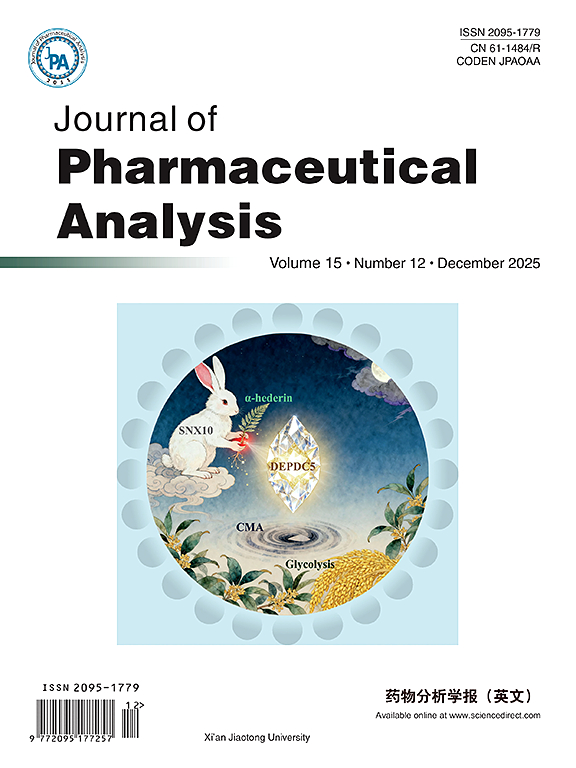
Reprogramming oncogenic signaling pathways to generate anti-tumor effects is a promising strategy for targeted cancer intervention, without significant off-target effects. Although reprogramming multi-oncoprotein interactions in a single signaling pathway axis has been shown to achieve sustained efficacy, there are several challenges that limit its clinical application. Herein, we transformed the mouse double minute 2 homolog (MDM2)-heat shock cognate protein 70 (HSC70) axis, a tumor-promoting pathway, into an activator of anti-tumor immunity using the Path-editor, an artificial selenoprotein. Once it enters the cell, Path-editor decomposes into PMI and PPI peptides: PMI inhibits MDM2-mediated p53 degradation and promotes HSC70 expression, while PPI binds to HSC70, enabling its ability to selectively degrade the programmed cell death ligand 1 (PD-L1). As a proof of concept, we tested its performance in microsatellite-stable (MSS) colorectal cancer, which typically displays limited responsiveness to immunotherapy. The results indicated that Path-editor effectively attenuated PD-L1 expression and reversed immune evasion in both CT26 allografts and humanized patient-derived tumor xenograft (PDX) models, thereby inhibiting tumor progression with high biosafety. Therefore, this paper introduces Path-editor as a paradigm for reprogramming oncogenic multi-protein pathways, utilizing selenium-assisted approach to achieve the rapid design of tumor-specific pathway editors. This strategy is expected to reverse immune escape in MSS colorectal cancer and treat difficult malignancies.

| [1] |
Z. Liu, H. Chen, L. Zheng, et al., Angiogenic signaling pathways and anti-angiogenic therapy for cancer, Signal Transduct. Target. Ther. 8 (2023), 198.
|
| [2] |
K.A. Zielinska, V.L. Katanaev, Information Theory: New Look at Oncogenic Signaling Pathways, Trends Cell Biol. 29 (2019) 862-875.
|
| [3] |
M. Wade, Y.C. Li, G.M. Wahl, MDM2, MDMX and p53 in oncogenesis and cancer therapy, Nat. Rev. Cancer 13 (2013) 83-96.
|
| [4] |
M. Munisamy, N. Mukherjee, L. Thomas, et al., Therapeutic opportunities in cancer therapy: targeting the p53-MDM2/MDMX interactions, Am. J. Cancer Res. 11 (2021) 5762-5781.
|
| [5] |
J.J. Manfredi, Mdm2 and MdmX: Partners in p53 Destruction, Cancer Res. 81 (2021) 1633-1634.
|
| [6] |
K.M. Sakamoto, K.B. Kim, A. Kumagai, et al., Protacs: Chimeric molecules that target proteins to the Skp1-Cullin-F box complex for ubiquitination and degradation, Proc. Natl. Acad. Sci. USA 98 (2001) 8554-8559.
|
| [7] |
J.J. Kim, D.H. Kim, J.Y. Lee, et al., cAMP/EPAC Signaling Enables ETV2 to Induce Endothelial Cells with High Angiogenesis Potential, Mol. Ther. 28 (2020) 466-478.
|
| [8] |
V. Gambardella, N. Tarazona, J.M. Cejalvo, et al., Personalized Medicine: Recent Progress in Cancer Therapy, Cancers (Basel) 12 (2020), 1009.
|
| [9] |
L. Yi, J. Li, CRISPR-Cas9 therapeutics in cancer: Promising strategies and present challenges, Biochim. Biophys. Acta 1866 (2016) 197-207.
|
| [10] |
C. Wang, Y. Zhang, S. Yang, et al., PROTACs for BRDs proteins in cancer therapy: A review, J. Enzym. Inhib. Med. Chem. 37 (2022) 1694-1703.
|
| [11] |
T. Sato, H. Clevers, Growing self-organizing mini-guts from a single intestinal stem cell: Mechanism and applications, Science 340 (2013) 1190-1994.
|
| [12] |
E. Chevet, C. Hetz, A. Samali, Endoplasmic reticulum stress-activated cell reprogramming in oncogenesis, Cancer Discov. 5 (2015) 586-597.
|
| [13] |
L.C. D'Souza, A. Shekher, K.B. Challagundla, et al., Reprogramming of glycolysis by chemical carcinogens during tumor development, Semin. Cancer Biol. 87 (2022) 127-136.
|
| [14] |
S. Gourisankar, A. Krokhotin, W. Ji, et al., Rewiring cancer drivers to activate apoptosis, Nature 620 (2023) 417-425.
|
| [15] |
A.A. Ivanov, F.R. Khuri, H. Fu, Targeting protein-protein interactions as an anticancer strategy, Trends Pharmacol. Sci. 34 (2013) 393-400.
|
| [16] |
A.P. Higueruelo, H. Jubb, T.L. Blundell, Protein-protein interactions as druggable targets: Recent technological advances, Curr. Opin. Pharmacol. 13 (2013) 791-796.
|
| [17] |
J.G. Moffat, J. Rudolph, D. Bailey, Phenotypic screening in cancer drug discovery - past, present and future, Nat. Rev. Drug Discov. 13 (2014) 588-602.
|
| [18] |
F. Cheng, I.A. Kovacs, A.L. Barabasi, Network-based prediction of drug combinations, Nat. Commun. 10 (2019), 1197.
|
| [19] |
N.P. Keller, Translating biosynthetic gene clusters into fungal armor and weaponry, Nat. Chem. Biol. 11 (2015) 671-677.
|
| [20] |
L.S. Qi, M.H. Larson, L.A. Gilbert, et al., Repurposing CRISPR as an RNA-guided platform for sequence-specific control of gene expression, Cell 184 (2021), 844.
|
| [21] |
F. Wu, J. Yang, J. Liu, et al., Signaling pathways in cancer-associated fibroblasts and targeted therapy for cancer, Signal Transduct. Target. Ther. 6 (2021), 218.
|
| [22] |
V. Poli, L. Fagnocchi, A. Zippo, Tumorigenic Cell Reprogramming and Cancer Plasticity: Interplay between Signaling, Microenvironment, and Epigenetics, Stem Cells Int 2018 (2018), 4598195.
|
| [23] |
J. Luo, N.L. Solimini, S.J. Elledge, Principles of cancer therapy: Oncogene and non-oncogene addiction, Cell 136 (2009) 823-837.
|
| [24] |
G.A. Rabinovich, D. Gabrilovich, E.M. Sotomayor, Immunosuppressive strategies that are mediated by tumor cells, Annu. Rev. Immunol. 25 (2007) 267-296.
|
| [25] |
W.A. Lim, C.H. June, The Principles of Engineering Immune Cells to Treat Cancer, Cell 168 (2017) 724-740.
|
| [26] |
J. Galon, D. Bruni, Approaches to treat immune hot, altered and cold tumours with combination immunotherapies, Nat. Rev. Drug Discov. 18 (2019) 197-218.
|
| [27] |
S.B. Moon, D.Y. Kim, J.H. Ko, et al., Recent advances in the CRISPR genome editing tool set, Exp. Mol. Med. 51 (2019) 1-11.
|
| [28] |
X.H. Zhang, L.Y. Tee, X.G. Wang, et al., Off-target Effects in CRISPR/Cas9-mediated Genome Engineering, Mol. Ther. Nucleic Acids 4 (2015), e264.
|
| [29] |
R.J. Platt, S. Chen, Y. Zhou, et al., CRISPR-Cas9 knockin mice for genome editing and cancer modeling, Cell 159 (2014) 440-455.
|
| [30] |
H. Gao, X. Sun, Y. Rao, PROTAC Technology: Opportunities and Challenges, ACS Med. Chem. Lett. 11 (2020) 237-240.
|
| [31] |
K. Raina, C.M. Crews, Targeted protein knockdown using small molecule degraders, Curr. Opin. Chem. Biol. 39 (2017) 46-53.
|
| [32] |
M. Pazgier, M. Liu, G. Zou, et al., Structural basis for high-affinity peptide inhibition of p53 interactions with MDM2 and MDMX, Proc. Natl. Acad. Sci. USA 106 (2009) 4665-4670.
|
| [33] |
J. Yan, D. Liu, J. Wang, et al., Rewiring chaperone-mediated autophagy in cancer by a prion-like chemical inducer of proximity to counteract adaptive immune resistance, Drug Resist. Updat. 73 (2024), 101037.
|
| [34] |
Y. Zhao, D. Liu, W. Yang, et al., Resetting the Hsc70-mediated lysosomal degradation of PD-L1 via a supramolecular meso peptide for the restoration of acquired anti-tumor T cell immunity, J. Nanotechnol. 23 (2025), 79.
|
| [35] |
W. He, J. Yan, Y. Li, et al., Resurrecting a p53 peptide activator-An enabling nanoengineering strategy for peptide therapeutics, J. Control. Release 325 (2020) 293-303.
|
| [36] |
Y. Zhang, Z. Huang, K. Li, et al., TrkA promotes MDM2-mediated AGPS ubiquitination and degradation to trigger prostate cancer progression, J. Exp. Clin. Cancer Res. 43 (2024), 16.
|
| [37] |
M. Wiech, M.B. Olszewski, Z. Tracz-Gaszewska, et al., Molecular mechanism of mutant p53 stabilization: The role of HSP70 and MDM2, PLoS One 7 (2012), e51426.
|
| [38] |
D. Li, N.D. Marchenko, R. Schulz, et al., Functional inactivation of endogenous MDM2 and CHIP by HSP90 causes aberrant stabilization of mutant p53 in human cancer cells, Mol. Cancer Res. 9 (2011) 577-588.
|
| [39] |
D.Y. Garcia-Ortega, S.A. Cabrera-Nieto, H.S. Caro-Sanchez, et al., An overview of resistance to chemotherapy in osteosarcoma and future perspectives, Cancer Drug Resist. 5 (2022) 762-793.
|
| [40] |
I. Sahin, S. Zhang, A. Navaraj, et al., AMG-232 sensitizes high MDM2-expressing tumor cells to T-cell-mediated killing, Cell Death Discov. 6 (2020), 57.
|
| [41] |
J. Yan, F. Ji, S. Yan, et al., A general-purpose Nanohybrid fabricated by Polymeric Au(I)-peptide precursor to wake the function of Peptide Therapeutics, Theranostics 10 (2020) 8513-8527.
|
| [42] |
J. Yan, Y. Yao, S. Yan, et al., Chiral Protein Supraparticles for Tumor Suppression and Synergistic Immunotherapy: An Enabling Strategy for Bioactive Supramolecular Chirality Construction, Nano Lett. 20 (2020) 5844-5852.
|
| [43] |
W. Yang, W. Liu, X. Li, et al., Turning chiral peptides into a racemic supraparticle to induce the self-degradation of MDM2, J. Adv. Res. 45 (2023) 59-71.
|
| [44] |
D. Liu, J. Yan, F. Ma, et al., Reinvigoration of cytotoxic T lymphocytes in microsatellite instability-high colon adenocarcinoma through lysosomal degradation of PD-L1, Nat. Commun. 15 (2024), 6922.
|
| [45] |
X. Xu, T. Xie, M. Zhou, et al., Hsc70 promotes anti-tumor immunity by targeting PD-L1 for lysosomal degradation, Nat. Commun. 15 (2024), 4237.
|
| [46] |
J.K. Mandula, R.A. Sierra-Mondragon, R.V. Jimenez, et al., Jagged2 targeting in lung cancer activates anti-tumor immunity via Notch-induced functional reprogramming of tumor-associated macrophages, Immunity 57 (2024) 1124-1140.e9.
|
| [47] |
X. Wang, Y. Zhao, X. Li, et al., Liposomal STAT3-Degrading PROTAC Prodrugs Promote Anti-Hepatocellular Carcinoma Immunity via Chemically Reprogramming Cancer Stem Cells, Nano Lett. (2024).
|
| [48] |
G.I. Harisa, T.M. Faris, A.Y. Sherif, et al., Gene-editing technology, from macromolecule therapeutics to organ transplantation: Applications, limitations, and prospective uses, Int. J. Biol. Macromol. 253 (2023), 127055.
|
| [49] |
H. Maeda, The enhanced permeability and retention (EPR) effect in tumor vasculature: the key role of tumor-selective macromolecular drug targeting, Adv. Enzyme Regul. 41 (2001) 189-207.
|
| [50] |
Z. Xiong, L. He, F. Pi, et al., Intracellular Redox Environment Determines Cancer-normal Cell Selectivity of Selenium Nanoclusters, Angew. Chem. Int. Ed. 64 (2025), e202416006.
|
| [51] |
L. Zhao, J. Zhao, K. Zhong, et al., Targeted protein degradation: Mechanisms, strategies and application, Signal Transduct. Target. Ther. 7 (2022), 113.
|
| [52] |
H. Song, L. Chen, X. Pan, et al., Targeting tumor monocyte-intrinsic PD-L1 by rewiring STING signaling and enhancing STING agonist therapy, Cancer Cell 43 (2025) 503-518.e10.
|
| [53] |
L. Chang, N.Y. Jung, A. Atari, et al., Systematic profiling of conditional pathway activation identifies context-dependent synthetic lethalities, Nat. Genet. 55 (2023) 1709-1720.
|
| [54] |
L. He, Z. Zhang, Z. Tang, et al., Industrial-level production of ultrastable selenium nanoparticles using a confined coordination synthetic strategy, Cell Rep. Phys. Sci. 5 (2024), 102303.
|
| [55] |
L. Andersson, L. Blomberg, M. Flegel, et al., Large-scale synthesis of peptides, Biopolymers 55 (2000) 227-250.
|
| [56] |
Y. Huang, Q. Chen, H. Zeng, et al., A review of selenium (Se) nanoparticles: From synthesis to applications, Part. Part. Syst. Charact. 40 (2023), 2300098.
|
00138-86de4eaea-eba0-40e6-8903-f5798329324b.jpg)
Figures(1)
Supported by:
Beijing Renhe Information Technology Co. Ltd





 DownLoad: